For more information regarding how we can support people applying to or at ASL, or more broadly with the US Curriculum, please click here to visit our US Curriculum webpage.
Few schools in London generate quite the same level of parental interest as the American School in London (ASL). Perched in St John’s Wood, roughly two and a half miles from the centre of the city, it has spent seven decades building a reputation that now places its graduates at Yale, Oxford, Imperial and Bocconi in the same year. The waiting lists are long, the fees are significant and the academic expectations are real.
This guide sets out what parents genuinely need to know, whether they are considering the school for the first time, working through an application, or already enrolled and trying to make the most of what ASL offers.
What kind of school is ASL?
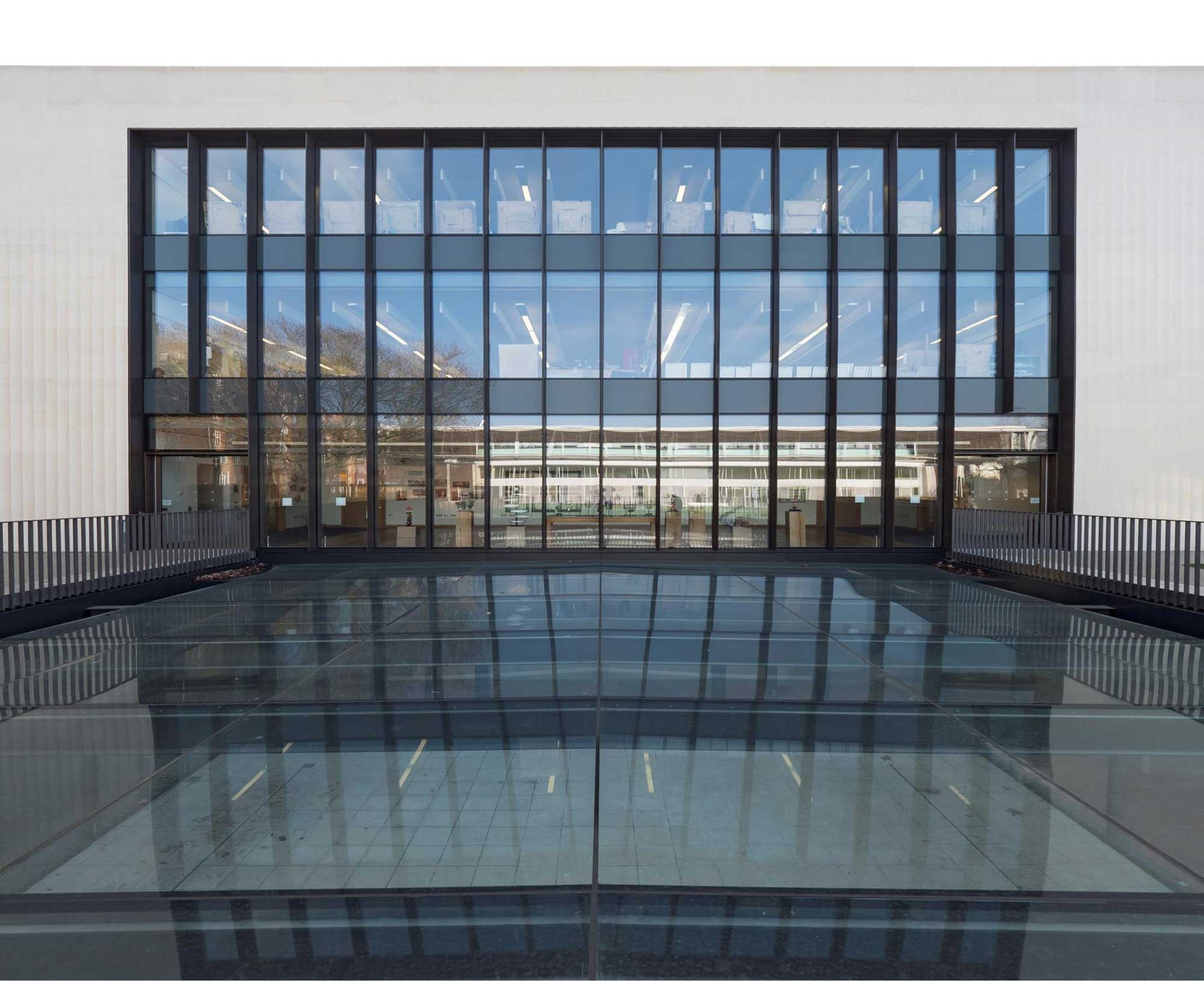
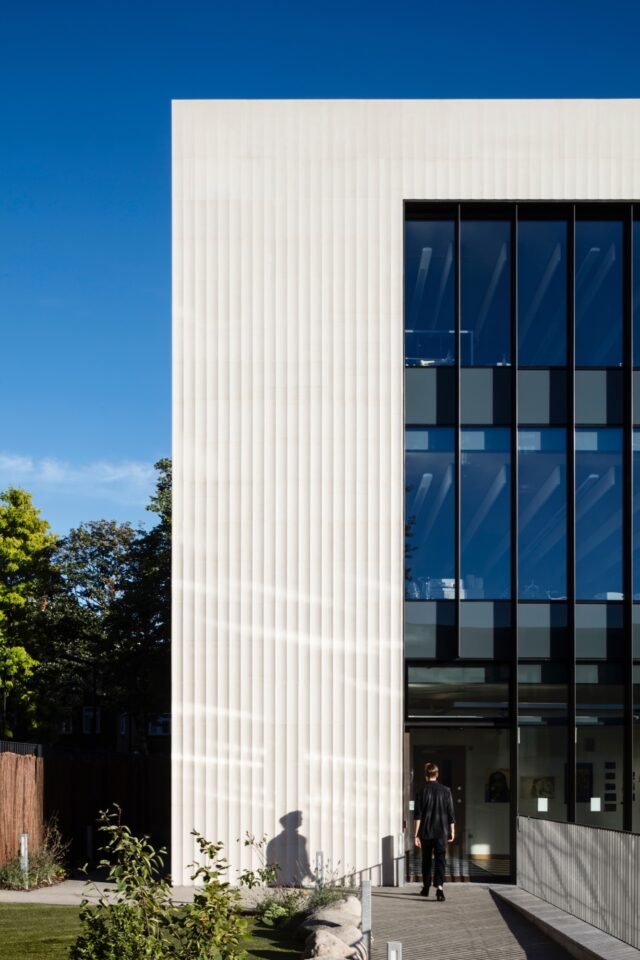
ASL occupies a substantial purpose-built campus in NW8 with an underground six-lane swimming pool, a performance space that seats 450, dedicated ceramics and photography studios, and a design and fabrication facility called the MILL, stocked with 3D printers, laser cutters and robotics equipment. These are not typical London school facilities. They are exceptional ones.
There is no school uniform, which tends to catch British families off guard. Classes in the Lower School have between 18 and 22 pupils supported by two members of staff. By the High School, groups shrink to around 15 with a single subject specialist. The teaching environment is deliberately flexible and collaborative rather than formal.
The school draws from a genuinely international community. Around 76% of pupils have at least one American parent, but that figure has been shifting steadily. Approximately 41% of pupils hold a second passport, and British families now make up a meaningful and growing share of the intake. In 2025, 89% of enrolled families chose to remain for the following year.
A-levels and the IB are not on offer here. The curriculum follows American national standards throughout: Common Core in English and Mathematics, Next Generation Science Standards, ACTFL proficiency frameworks for languages. Parents who enrol their children at ASL are choosing a consistent, coherent American education from the earliest years to the point of university application, and that clarity of purpose is one of the school’s genuine strengths.
The admissions process
Before Grade 5
For children entering up to and including Grade 4, the admissions process involves school reports, a teacher reference and an applicant questionnaire. There is no standardised testing at this stage. Entry is competitive at every level and places at the Lower School are particularly limited relative to the number of families who want them.
The application itself
The application asks for school reports and a confidential teacher reference, but the element that catches many families unprepared is the parent statement. ASL asks parents to articulate specifically why an American education is right for their child. This statement is read alongside the teacher reference, so the two need to tell a consistent story. The school has a genuine and well-established culture of parental involvement, and applications that reflect a real understanding of that tend to stand out.
The application fee is £360 inclusive of VAT and is waived for financial aid applicants. Applications submitted by 15 January receive decisions by the end of February. Those completed by 15 March are notified by 15 April. Everything after that point is assessed on a rolling basis.
The waiting list is substantial but more fluid than many families expect. Movement is driven by cohort dynamics rather than a simple queue, which means a place that looks unavailable in February may open up by June. Families on the list are better served by staying in active contact with the admissions office than by quietly waiting.
Grade 5 and above: the testing requirement
From Grade 5 upwards, ASL requires a recent standardised test result in English and Mathematics as part of every application. The accepted tests are the ISEE (Independent School Entrance Exam), administered by the Educational Records Bureau, and the SSAT (Secondary School Admissions Test). The ISEE operates across three levels tied to the year of entry: Lower Level covers Grades 5 and 6, Middle Level covers Grades 7 and 8, and Upper Level applies from Grade 9 onwards. Each sitting includes verbal reasoning, quantitative reasoning, reading comprehension and mathematics achievement sections, plus a timed essay. Pupils can sit the ISEE up to three times in a single academic year, and ASL recommends the at-home online format for most families as the most straightforward option.
It is worth being clear about what ASL does not accept: the CAT, any ISEB assessment, TerraNova, UK SATs and US state tests are all excluded. The school does not operate a minimum pass mark. Every score is read in the context of the full application, and the admissions team is candid that families often worry far more about testing results than the situation warrants.
Source: asl.org/admissions/apply/testing
The curriculum: what surprises families
For families joining from the United States
American families tend to find the academic side of ASL straightforward. The grading system, course structures and classroom expectations will be recognisable. What takes adjustment is everything else: a new city, a school community that is more internationally mixed than most families will have encountered in the States, and the particular rhythms of London life. Children who arrive mid-year sometimes take a term to find their feet socially, and targeted support during that period is often about confidence rather than catching up academically.
For families joining from British or IB schools
The academic adjustment here is real and worth preparing for. British schools tend to introduce extended analytical writing at GCSE; ASL expects it considerably earlier. By the middle school years, pupils are already constructing thesis-led arguments, working with primary and secondary sources and producing written work that requires a degree of independent critical thinking that takes time to develop if it has not been practised before. Writing support is the most consistent gap we see in pupils transferring from British and IB schools.
Mathematics presents a different kind of transition. Common Core places emphasis on conceptual understanding and being able to explain reasoning, rather than executing procedures correctly. A pupil with strong procedural skills, which most well-taught British pupils have, can initially find the question style disorienting even when the actual mathematics is within reach. This is a gap that closes predictably with the right guidance.
The PSAT, SAT and AP: how they fit together
These three assessments sit at the heart of the American High School experience and are worth understanding clearly before a child reaches Grade 9.
The PSAT is a practice examination taken in Grades 9 and 10. In Grade 11 it takes on greater significance, doubling as the entry route to the National Merit Scholarship Programme, one of the most prestigious academic recognition schemes in the United States and a meaningful addition to a university application.
The SAT is the main standardised university admissions test, taken in Grades 11 and 12 and marked out of 1600. The ACT covers broadly the same ground and is accepted equally by American universities; the two tests suit different types of thinkers and it is sensible to try both before committing. British families should note that the SAT in this context refers to the American College Board examination and has nothing to do with the UK Key Stage tests, which ASL does not use in its own admissions process.
AP courses stand apart from both the PSAT and SAT. Rather than being a single examination, each AP is a year-long taught subject, assessed by a terminal examination in May and scored on a scale from 1 to 5. A pupil studying AP Chemistry, AP Calculus and AP English Language is broadly doing the equivalent of three A-level subjects, with the additional benefit that scores of 4 and 5 frequently convert into university course credits, meaning students can start their degree with advanced standing. ASL runs AP provision across more than 20 subjects.
According to the College Board’s published admissions data, rigour of secondary school record is rated the single most important academic factor by admissions offices at every Ivy League university, sitting above essays, teacher references and extracurricular achievements. In practice, competitive applicants to selective universities tend to carry four to six AP subjects in Grade 11. The subjects chosen matter as much as the number: a pupil who wants to study medicine but has avoided AP Biology and AP Chemistry will struggle to make a convincing case on paper, regardless of what they write about themselves. The SAT in isolation, without an AP programme behind it, rarely satisfies the expectations of the most selective institutions. For those applying to UK universities, fours and fives in relevant AP subjects are well-regarded by admissions teams at Oxbridge and throughout the Russell Group.
Source: College Board AP data, 2025; Common Data Set Section C7 filings, Ivy League institutions, 2024-25
University destinations
The 2025 leavers list gives the clearest picture of where an ASL education can take a pupil. The 135 graduates between them made 1,608 applications to universities in 10 countries. American destinations included Yale, Brown, Harvard, Princeton, Cornell and Dartmouth, alongside 226 other colleges and universities. In the UK, pupils were accepted at Oxford, Cambridge, Imperial, Durham and Edinburgh, amongst 82 others. Eighteen Canadian universities featured, as did 14 European institutions, with Bocconi and IE Madrid the most frequently chosen.
Source: ASL academic profile of graduating class, published 2025
What this range illustrates is that the American curriculum keeps options genuinely open. A pupil with strong AP results does not have to choose between the United States and the United Kingdom when applying. Both routes are available simultaneously, and that breadth is particularly useful for internationally mobile families who may not yet know where they will be living when their child finishes school.
Where pupils most often need support
At Middle School level, the most frequent gaps are analytical writing, independent reading stamina and the ability to manage multiple concurrent assignments without a great deal of external structure. At High School level, the conversation shifts to AP preparation and, in Grades 11 and 12, to the SAT. The pupils who perform best in their AP examinations are consistently those who have worked steadily throughout the year. The ones who struggle are almost always those who underestimated how much sustained effort a full AP programme requires.
For families preparing an ISEE or SSAT application, the key issue is usually familiarity rather than ability. British pupils encounter question styles and mathematical framing that are unfamiliar even when the underlying knowledge is solid. A short period of focused preparation makes the test feel recognisable rather than alien, and that shift in confidence tends to show up directly in the result.
Practical notes for families
Fees 2025/26, inclusive of VAT
Lower School fees stand at £40,188 per year. Middle School fees are £44,616, and High School fees are £46,428. All figures include VAT and are billed in two equal instalments across the academic year. Financial aid is available on a means-tested basis; over 225 pupils currently receive support, with awards ranging from 25% to the full fee. The £360 application fee is waived for families applying for financial aid at the same time.
Source: asl.org
WorkX: work experience in the High School
ASL runs a structured work experience initiative called WorkX, available to pupils in Grades 10 through 12. In summer 2025, 135 pupils completed 169 placements across 65 organisations. American university applications place considerable weight on how pupils spend their summers, and a WorkX placement with a substantive employer tells a far more compelling story than unstructured time off. Families are wise to begin thinking about this from Grade 9 rather than leaving it until the summer before applications are due.
Source: ASL WorkX programme data, 2025
Support within the school
ASL has in-house provision for English as an Additional Language, educational psychology, learning differences, speech and language therapy and pastoral counselling across all year groups. These services are well regarded and well used. They are designed, however, to address whole-school needs at a structural level. The one-to-one academic support that a pupil needs when adjusting to a new curriculum, or when preparing for AP examinations that will directly affect their university options, sits in a different category and is where specialist tuition tends to make the most visible difference.
Is ASL right for your child?
ASL suits children who are self-motivated, intellectually engaged and capable of managing a demanding workload across multiple subjects simultaneously. It suits families who want genuine dual access to American and British universities, who value a school culture that is collaborative rather than hierarchical, and who are prepared to invest in supporting their child properly through a curriculum that rewards effort and independent thinking.
It does not suit every child, and the admissions team is usually honest about that. The best starting point for any family still deciding is to attend one of the Open House sessions, which give a much more accurate sense of the school’s atmosphere than any written description can.
If you have already decided on ASL and are thinking about how to prepare your child well, whether for the admissions process, for a transition from another system, or for AP and SAT preparation in the High School years, we would be glad to have a conversation about what support would look like in practice.
Athena Tuition
We work with pupils at ASL and other international schools across London, providing specialist tuition for ISEE and SSAT preparation, American curriculum transition, SAT coaching and AP subject support from Grades 5 through 12. More information here.









 The unprecedented surge in the coronavirus brought the world to a standstill. However, the situation is now easing with the development and deployment of vaccines against the pandemic –


